Fermented foods have quietly moved from the back of the fridge to the centre of the plate. Chefs build tasting menus around them, and shoppers now reach for kimchi and kefir the way they once reached for vitamins. Behind the trend is a real idea worth understanding: the link between fermented foods and gut health. This is not a miracle cure or a passing fad. It is one of the oldest food traditions on earth, and the science now catching up to it is genuinely interesting. Here is what fermentation actually does, and how to bring more of it into your own kitchen without overthinking it.
What fermentation actually is
At its simplest, fermentation is controlled decay put to good use. Bacteria and yeasts break down sugars in food, producing acids, gases or alcohol that preserve it and transform its flavour. The tang of sourdough, the fizz of kombucha and the deep savour of miso all come from this process, described in more detail in the overview of fermentation in food processing. Long before refrigeration existed, this was how people kept a harvest edible through winter. The flavour was a happy side effect that we now chase for its own sake.
Why gut health enters the picture
Your digestive system is home to trillions of microbes, known collectively as the gut microbiota, and a growing body of research links their diversity to everything from digestion to mood and immunity. Many fermented foods carry live bacteria, and some of those can survive the journey to the gut and add to the mix. That is the core of the case for fermented foods for gut health: they may help feed and diversify the community of microbes already living inside you. The evidence is still developing, and no single food is a magic bullet, but the direction of travel is encouraging.
A short fermented foods list to start with
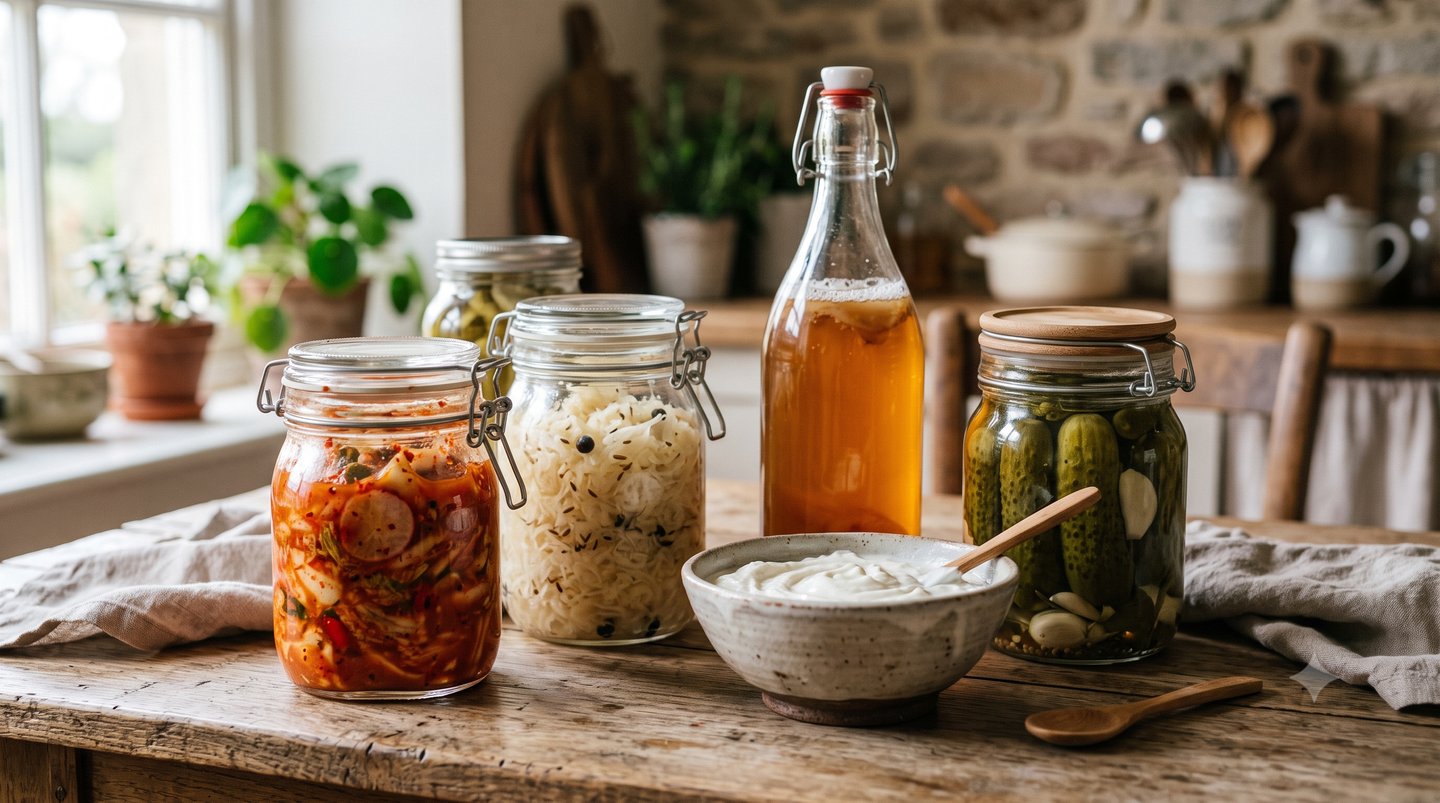
You do not need anything exotic. A useful fermented foods list for beginners includes yogurt and kefir from dairy, sauerkraut and kimchi from vegetables, miso and tempeh from soy, and kombucha if you like a fizzy drink. One important caveat: heat kills the live cultures, so a jar of sauerkraut that has sat pasteurised on a shelf will not do much. Look for products in the chilled section labelled live or raw, or make your own, which is cheaper and far more forgiving than people expect.
Fermentation around the world
None of this is new, and it is not owned by any one cuisine. Almost every food culture has its own ferments, and many of them live at the heart of everyday street food: Korean kimchi, German sauerkraut, Japanese pickles, Ethiopian injera, Mexican tepache. Exploring them is one of the more delicious ways to understand a place. It is also a reminder that eating well and eating traditionally often turn out to be the same thing, long before anyone printed the word probiotic on a label.
How to actually add more
Start small and stay consistent, since a spoonful of something fermented most days does more than an occasional large serving. Add a dollop of yogurt to breakfast, a forkful of kimchi to rice or eggs, a splash of kombucha in the afternoon. Introduce it gradually, because a sudden flood of new bacteria can leave some people bloated for a few days while the gut adjusts. Pair your ferments with fibre rich plants, which give those microbes something to feed on, and the two together tend to work better than either one alone.
A note on hype and labels
Not every product with a health claim earns it. The market for gut friendly foods has exploded, and plenty of items ride the trend without carrying meaningful live cultures. Read the labels rather than the front of pack slogans, and stay sceptical of anything promising dramatic results. It is worth remembering that food producers are increasingly global, and research shows shoppers are more likely to trust and buy in their own language, so clear, honest labelling in the local tongue is itself a small sign of a brand that respects its customers. When in doubt, whole and simple beats processed and heavily marketed.
What about making your own
Home fermenting sounds intimidating and mostly is not. A basic sauerkraut needs only cabbage, salt and a clean jar, left on the counter for a week or two. Yogurt needs milk and a spoon of an existing live culture. The main rules are cleanliness and patience, and a quick read of any trusted guide will cover the safety basics. Making your own also gives you full control over salt and sugar, and it turns a grocery habit into a small, satisfying kitchen ritual.
The takeaway
Fermented foods are one of the rare wellness ideas that are cheap, genuinely pleasurable and grounded in centuries of practice. You do not need to overhaul your diet or spend a fortune. A little live yogurt, some good sauerkraut, the occasional glass of kombucha, and a bit of patience will do more for your gut than most of the supplement aisle. Treat fermentation as a habit rather than a cure, and it quietly earns its place at the table.